

Certification Tracking for General Contracting
Certification Tracking is the process of defining, recording, monitoring, and renewing all licenses and certifications required for employees to work safely and legally on projects. It ties role-based and project-specific requirements to actual people, expiration dates, and supporting documents. The process ensures no one is assigned to work that they are not certified for, and that clients and regulators can be shown proof of compliance at any time. When done well, Certification Tracking prevents lost work, site access problems, fines, and safety exposure.
Define certification requirements by role and project type
Step 1: List all roles and typical project types
Start by listing all standard company roles (for example, laborer, carpenter, foreman, superintendent, project manager, estimator) and the main project types you perform (for example, healthcare, industrial, school work, government buildings). Use the same role names that appear in HR and workforce planning.
Step 2: Gather regulatory and client requirement information
Work with the safety manager and project managers to gather requirements from OSHA-equivalent regulations, local authorities, unions, and key clients. Look for specific requirements like OSHA-10/30, equipment operator cards, first aid/CPR, confined space, or site-specific access badges.
Step 3: Create a matrix of role vs. certification
Build a table where each row is a role and each column is a certification or license. Mark which certifications are required for each role under normal conditions and note any that are “strongly preferred” but not mandatory.
Step 4: Overlay project-specific requirements
Add another layer to your matrix or create a separate table that shows which certifications are required for certain project types (for example, hospital work requiring special infection control training, or refineries requiring site-specific safety credentials).
Step 5: Distinguish must-have vs. nice-to-have
For each role and project type, clearly label certifications as “Required,” “Required for Certain Projects,” or “Optional/Development.” This will drive how urgently renewals are handled and how strictly compliance is enforced.
Step 6: Review and approve requirements with safety and operations
Share the draft requirements matrix with safety, HR, and operations leadership. Discuss any unclear items and revise as needed. Once approved, store the matrix in a central location and mark it as the current standard for certification requirements.
Set up and maintain certification tracking system
Step 1: Choose the tracking tool
Decide whether you will use your HRIS, a safety/compliance system, or a structured spreadsheet. Consider ease of use, reporting capability, and who will access the data. If you use a spreadsheet, ensure it is stored in a secure, shared location with backups.
Step 2: Define standard data fields
Decide what fields each certification record must include, such as employee name, employee ID, role, certification type, issuing body, issue date, expiration date, document location, and status (active, expired, pending). Add fields for project-specific badges if needed.
Step 3: Configure the system or template
Set up your tracking tool with these fields and create dropdown lists where possible (for example, certification types) to keep entries consistent. Set up filters or views for different users, such as safety, HR, and project managers.
Step 4: Establish user permissions and responsibilities
Decide who can add, edit, and view certification records. For example, HR might manage personal and license details, safety might manage training certifications, and project managers might view status only. Document these responsibilities.
Step 5: Create basic reports or views
Build standard reports or saved filters for common needs: upcoming expirations, certifications by project, certifications by role, and employees missing required items. Test these views to make sure they show the right data.
Step 6: Document system procedures
Write a short procedure explaining how to enter, update, and report certifications using the chosen tool. Store this procedure with your HR and safety SOPs so new staff can learn the system quickly.
Collect and verify employee certification documents
Step 1: Request certification documents from employees
Prepare a clear request to employees explaining which certifications you need copies of (for example, OSHA cards, equipment cards, trade licenses). Include a due date and acceptable formats (photo, scan, or original for inspection).
Step 2: Provide simple instructions for submission
Tell employees exactly how to submit their documents, such as emailing a clear photo to HR, uploading to a portal, or bringing the card to the office for scanning. Provide help for anyone who struggles with technology.
Step 3: Review documents for completeness and clarity
As documents come in, check that they are legible and include the employee’s name, certification type, issuing organization, issue date, and expiration date. If anything is missing or unclear, contact the employee for a better copy.
Step 4: Verify authenticity where appropriate
For critical certifications or licenses, verify authenticity through the issuing body’s website or hotline if available. For example, check license status on a state licensing database. Document the date and method of verification.
Step 5: Label and store copies securely
Save digital copies in a structured folder or within your HR/compliance system, organized by employee name and certification type. Ensure access is limited to authorized HR and safety staff to protect personal information.
Step 6: Update tracking system with verified data
After verification, enter or update certification records in your tracking system with dates and document locations. Mark the record as “Verified” and note who performed the verification and when.
Enter and update certifications in tracking system
Step 1: Create initial entries for each employee
For employees who already submitted documents, create or update their records in the tracking system. Make sure each certification appears only once per person with the correct type and dates.
Step 2: Double-check key fields for accuracy
Review entries for typos or incorrect dates, especially expiration dates, which are critical for alerts. Cross-check against the actual document before saving.
Step 3: Update records when new certifications are earned
When employees complete new training or obtain new licenses, add these to their records promptly. Include all required fields, such as issuing body and document location.
Step 4: Update records on renewal
When a certification is renewed, update the existing record with the new issue and expiration dates rather than creating a duplicate. Attach the new document copy and keep a note of the renewal in the comments field.
Step 5: Correct errors when discovered
If supervisors, employees, or audits reveal incorrect information, correct the data immediately. Add a brief note explaining the correction and date so there is a clear history.
Step 6: Schedule periodic data review
At least quarterly, review a sample of records across different roles to check for inconsistencies or missing data. Use findings to improve how you enter and update records going forward.
Monitor expiration dates and generate alerts
Step 1: Decide on lead times for alerts
Agree with safety and operations on how far in advance you want to be notified of expirations (for example, 90 days, 60 days, and 30 days before expiry). Different certifications might require different lead times based on how long renewals take.
Step 2: Configure automated alerts if system supports it
If your tracking tool has alert functions, set up rules to send reminders to HR/safety and, if possible, directly to employees and their supervisors based on expiration dates.
Step 3: Create manual reminder reports if needed
If your tool is manual, create saved filters or reports that show certifications expiring in the next 30, 60, and 90 days. Run these reports on a regular schedule, such as monthly or bi-weekly.
Step 4: Review alert lists for accuracy
Before sending any notices, quickly review the upcoming expiration list to confirm that dates make sense and that renewals already in progress are noted correctly.
Step 5: Flag high-risk expirations
Identify expirations that would directly impact site access or legal compliance, such as equipment operator licenses or core safety cards. Mark these as high priority for follow-up.
Step 6: Record monitoring activities
Keep a simple log of when alerts were run and distributed. This log can be useful if a lapse is later questioned and you need to show that monitoring was in place.
Notify employees and supervisors of upcoming expirations
Step 1: Create a standard expiration notice template
Draft a simple, clear message that includes the certification name, expiration date, consequences of letting it lapse, and instructions on how to renew. Have versions for employees and supervisors if needed.
Step 2: Send initial notices at first alert interval
When a certification enters the alert window (for example, 90 days before expiration), send the initial notice to the employee and their direct supervisor. Include any links or contact information for training or testing providers.
Step 3: Send follow-up reminders closer to expiry
At subsequent intervals (for example, 60 and 30 days), send reminder notices to those who have not completed renewal. Adjust wording to emphasize urgency as the expiration date approaches.
Step 4: Encourage two-way communication
Invite employees and supervisors to reply with their renewal plan or to request help scheduling training or exams. Track these responses so you know who is actively working on renewal.
Step 5: Update tracking system with communication status
For each expiring certification, mark when notices and reminders were sent and note any responses, such as “renewal scheduled for [date].” This creates a clear trail of follow-up.
Step 6: Escalate critical cases
If a required certification is at risk of expiring without renewal scheduled, escalate to the safety manager or operations leadership. They may need to remove the employee from certain tasks until renewal is complete.
Coordinate certification renewal training and testing
Step 1: Identify renewals that require training or exams
From the expiring certifications list, mark which ones require formal training or testing (for example, equipment operator cards, certain safety credentials, trade licenses).
Step 2: Provide employees with approved providers and options
Send employees and supervisors a list of approved training and testing providers, including locations, formats (online or in-person), and approximate costs. Clarify whether the company or employee will schedule and pay initially.
Step 3: Schedule internal or external sessions
For groups needing the same renewal, consider scheduling internal classes or group sessions with an external provider. For individual renewals, support employees in booking their own courses and exams.
Step 4: Coordinate scheduling with project needs
Work with supervisors and project managers to pick training and testing times that minimize disruption to jobs. Avoid scheduling during critical inspections, concrete pours, or major milestones when possible.
Step 5: Track completion and collect new documentation
After training or testing, ask employees to submit updated certificates or cards immediately. Verify that they passed and that the new document has clear issue and expiration dates.
Step 6: Update records and close the renewal loop
Enter new dates into the tracking system, attach the renewed document, and change the certification status back to active. Remove the item from your expiring list and note the renewal in your renewal log.
Perform periodic certification compliance audits
Step 1: Define audit scope and frequency
Decide how often to audit (for example, quarterly) and whether each audit will cover the full company or focus on certain projects, roles, or regions. Document this plan so audits are not skipped.
Step 2: Select sample projects and employees
For each audit cycle, choose a sample of active projects and key roles (for example, all superintendents and equipment operators on those projects). Make sure the sample is large enough to give a reliable picture.
Step 3: Compare role requirements to actual certifications
For each selected employee, check the certification requirements matrix and compare it to their records in the tracking system. Note any missing or expired certifications that should be active.
Step 4: Verify documents against tracking system
Spot-check that the documentation stored for those certifications matches what is recorded in the system (issue dates, expiration dates, certification types). Correct any mismatches you find.
Step 5: Summarize findings and categorize issues
Create a short report listing compliance rates and any issues found, grouped into categories such as “missing documents,” “expired certifications,” and “incorrect data entries.”
Step 6: Assign corrective actions and follow up
Share the audit report with safety and operations leadership. Assign corrective actions to responsible supervisors or HR staff, including deadlines, and track completion until all issues are resolved.
Provide certification reports for clients and regulators
Step 1: Clarify the request requirements
When a client or regulator requests certification proof, ask exactly what they need: which roles, which certifications, date ranges, and preferred format (list, copies, or both). Note any deadlines.
Step 2: Run targeted reports from the tracking system
Use filters to pull data for the requested project, roles, or certification types. Ensure the report includes employee names, roles, certification names, issue and expiration dates, and status.
Step 3: Gather supporting documents
If copies of certifications are requested, retrieve the appropriate files from your document storage. Redact sensitive personal information if required, such as portions of identification numbers, following company policy.
Step 4: Assemble a clean report package
Combine the report and documents into a clearly labeled package, grouped by project, role, or certification type. Include a cover page summarizing what is included and the date generated.
Step 5: Review the package for accuracy and completeness
Before sending, quickly check that all requested items are included and that there are no obvious errors or missing pages. Correct anything that looks off.
Step 6: Transmit securely and log the response
Send the package via a secure method (encrypted email, secure portal) and record when and to whom it was sent. Save a copy of what was provided and reference the original request so you can answer any follow-up questions.
Report certification status and trends to leadership
Step 1: Define key metrics to track
Choose a small set of metrics such as percentage of required certifications that are current by role, number of expirations within 30/60/90 days, number of employees missing required certifications, and audit findings per quarter.
Step 2: Build a recurring certification status report
Create a standard report format or dashboard that displays these metrics by department, role, and project. Use charts or traffic-light indicators (green/yellow/red) to highlight risk areas.
Step 3: Set a reporting schedule
Agree with leadership on how often they want updates (for example, monthly or quarterly) and add these dates to your HR and safety calendars. Align this with other operations or safety meetings if possible.
Step 4: Generate and review the data before meetings
Before each reporting date, run the metrics from your tracking system and review them for reasonableness. Investigate any sudden changes so you can explain them.
Step 5: Present highlights, risks, and recommended actions
In leadership meetings or written summaries, highlight key points such as improving compliance, areas of concern, and recommended actions (for example, “invest in more in-house training for equipment operation”).
Step 6: Capture decisions and adjust processes
Note any decisions leadership makes based on the report, such as new requirements or budget approvals. Update your certification tracking and training processes to reflect these decisions and monitor for impact in future reports.
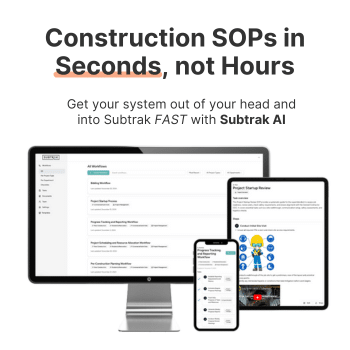
👈 Use this SOP template inside Subtrak
Edit with AI. Customize in seconds. Store and share all your SOPs and checklists in one place.