
Framing Readiness Checklist for Home Builder
This checklist ensures that all necessary preparations are complete before beginning the framing stage in custom home construction. It is crucial to confirm that the foundation is properly set, materials are delivered and inspected, and all plans and safety measures are in place. This process minimizes delays and ensures a smooth transition into the framing phase, maintaining project timelines and quality standards.
Confirm foundation completion
Step 1: Inspect foundation curing
Verify that the concrete foundation has cured for the recommended time, typically 7 to 28 days, depending on the mix and environmental conditions. Use a Schmidt hammer to test the surface hardness if necessary.
Step 2: Check for cracks or defects
Visually inspect the foundation for any cracks, spalling, or other defects. Use a measuring tape to assess the width of any cracks and consult with an engineer if they exceed acceptable limits.
Step 3: Verify dimensions and level
Use a laser level and tape measure to confirm that the foundation dimensions match the plans and that it is level. Address any discrepancies before proceeding.
Verify anchor bolt placement
Step 1: Check anchor bolt spacing
Measure the spacing of anchor bolts to ensure they match the construction plans, typically every 6 feet along the perimeter. Adjust as necessary to comply with local building codes.
Step 2: Inspect bolt height and alignment
Ensure that anchor bolts protrude the correct height above the foundation and are vertically aligned. Use a wrench to tighten any loose bolts.
Step 3: Confirm bolt type and size
Verify that the bolts are of the specified type and size, usually 1/2 inch diameter or as per the engineering specifications. Replace any incorrect bolts.
Confirm material delivery
Step 1: Check delivery schedule
Confirm the delivery date and time with the supplier to ensure materials arrive on schedule. Adjust the construction timeline if necessary.
Step 2: Inspect material quality
Upon delivery, inspect the lumber and other materials for quality and damage. Look for warping, knots, or other defects that could compromise structural integrity.
Step 3: Verify material quantities
Count and cross-check the delivered materials against the purchase order to ensure all items are present. Report any discrepancies to the supplier immediately.
Ensure layout accuracy
Step 1: Review architectural plans
Study the architectural plans to understand the required layout. Pay attention to wall locations, door and window openings, and any special features.
Step 2: Mark layout on foundation
Use chalk lines and a tape measure to mark the layout on the foundation. Double-check measurements for accuracy and adjust as necessary.
Step 3: Verify layout with team
Have a second team member review the layout markings to ensure accuracy. Discuss any discrepancies and resolve them before proceeding.
Ensure plan availability
Step 1: Gather all relevant plans
Collect all architectural, structural, and engineering plans needed for the framing stage. Ensure they are the latest versions.
Step 2: Store plans on-site
Place the plans in a designated area on-site where they are easily accessible to the construction team. Use a waterproof container to protect them from weather damage.
Step 3: Review plans with team
Conduct a meeting with the construction team to review the plans. Highlight key areas and any changes from previous versions.
Assess site access conditions
Step 1: Check access routes
Inspect the site access routes for any obstructions or hazards. Ensure that paths are clear for delivery trucks and construction equipment.
Step 2: Verify equipment access
Ensure that there is sufficient space for cranes, forklifts, and other equipment needed for framing. Adjust site layout if necessary to accommodate equipment.
Step 3: Communicate access plan
Inform the construction team and delivery personnel of the access plan. Provide maps or diagrams if necessary to clarify routes and staging areas.
Ensure safety requirements are met
Step 1: Inspect personal protective equipment
Ensure all workers have the necessary personal protective equipment (PPE), including hard hats, safety glasses, gloves, and steel-toed boots. Replace any damaged or worn-out PPE.
Step 2: Review safety protocols
Conduct a safety meeting to review protocols for working at heights, handling materials, and operating equipment. Emphasize the importance of following safety guidelines.
Step 3: Set up safety barriers
Install safety barriers and warning signs around hazardous areas. Ensure that fall protection systems are in place for elevated work areas.
Obtain inspection approvals
Step 1: Schedule inspections
Contact the local building department to schedule required inspections. Confirm the date and time to ensure availability of the inspector.
Step 2: Prepare for inspection
Ensure that the site is clean and organized before the inspector arrives. Have all relevant documents and plans ready for review.
Step 3: Address inspection findings
If the inspector identifies any issues, address them promptly. Make necessary corrections and request a follow-up inspection if needed.
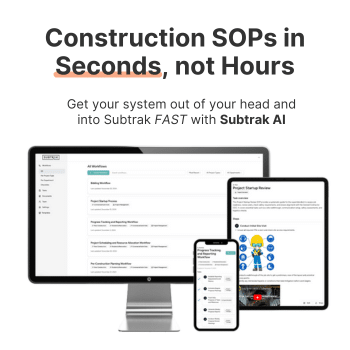
👈 Use this SOP template inside Subtrak
Edit with AI. Customize in seconds. Store and share all your SOPs and checklists in one place.