
MEP Rough-In Inspection Checklist for Home Builder
This checklist is designed for the Quality Control department of a home builder specializing in custom homes. It ensures that all mechanical, electrical, and plumbing (MEP) systems are correctly installed and compliant with building codes before insulation and drywall installation. The checklist covers inspecting mechanical ducts, plumbing lines, electrical wiring, equipment placement, penetrations, fire stopping, and code compliance. By following this checklist, quality control inspectors can identify and coordinate necessary corrections with trade partners, ensuring a seamless transition to the next construction phase.
Inspect mechanical duct installation
Step 1: Verify duct size and material
Check that the duct size and material match the design specifications. Use a tape measure to confirm dimensions and inspect the material for any signs of damage or incorrect type.
Step 2: Check duct routing and support
Ensure ducts are routed according to the plan and are properly supported. Look for any unnecessary bends or kinks that could impede airflow. Verify that hangers and supports are securely fastened and spaced correctly.
Step 3: Inspect duct connections and seals
Examine all duct connections for secure attachment and proper sealing. Use a flashlight to inspect joints and seams for gaps or leaks. Proper sealing is essential to prevent air loss and maintain system efficiency.
Inspect plumbing line installation
Step 1: Verify pipe material and size
Check that the pipe material and size conform to the design specifications. Inspect for any signs of damage or incorrect material usage. Use a caliper to measure pipe diameter if necessary.
Step 2: Check pipe routing and support
Ensure pipes are routed according to the plan and are adequately supported. Verify that hangers and brackets are correctly spaced and securely fastened to prevent sagging or movement.
Step 3: Inspect pipe connections and slope
Examine all pipe connections for secure attachment and proper sealing. Use a level to check the slope of drain pipes to ensure proper drainage. Look for any signs of leaks or improper installation.
Inspect electrical wiring installation
Step 1: Verify wire type and gauge
Check that the wire type and gauge match the design specifications. Inspect for any signs of damage or incorrect wire usage. Use a wire gauge tool to confirm wire size if necessary.
Step 2: Check wire routing and support
Ensure wires are routed according to the plan and are properly supported. Verify that wires are not pinched or damaged and that they are secured with appropriate fasteners.
Step 3: Inspect wire connections and terminations
Examine all wire connections for secure attachment and proper termination. Use a voltage tester to ensure connections are live and functioning correctly. Look for any signs of loose or exposed wires.
Verify equipment placement
Step 1: Check equipment location
Verify that all equipment is installed in the correct location as per the design plan. Use the plan drawings to confirm placement and ensure there is adequate clearance for maintenance.
Step 2: Inspect equipment mounting
Ensure that equipment is securely mounted and level. Check that mounting hardware is appropriate and correctly installed to prevent movement or vibration.
Step 3: Verify equipment connections
Examine all equipment connections for secure attachment and proper sealing. Ensure that electrical, plumbing, and duct connections are correctly made and free from leaks or loose fittings.
Inspect penetrations and fire stopping
Step 1: Identify all penetrations
Walk through the site and identify all penetrations for ducts, pipes, and wires. Use the design plan to ensure all necessary penetrations are accounted for.
Step 2: Check fire stopping materials
Verify that fire stopping materials are installed around all penetrations. Inspect for any gaps or missing materials that could compromise fire safety.
Step 3: Ensure proper sealing
Check that all penetrations are properly sealed to prevent air and moisture infiltration. Use a flashlight to inspect for any gaps or incomplete sealing.
Ensure code compliance
Step 1: Review local building codes
Familiarize yourself with the relevant local building codes and regulations. Use these codes as a reference during the inspection to ensure compliance.
Step 2: Conduct a thorough inspection
Perform a detailed inspection of all MEP installations, comparing them against code requirements. Look for any deviations or non-compliant installations.
Step 3: Document compliance findings
Record any code violations or areas of concern. Use a checklist or inspection report to document findings and communicate them to the relevant trade partners for correction.
Coordinate corrections with trade partners
Step 1: Communicate inspection findings
Share the inspection report with the relevant trade partners, highlighting areas that require correction. Use clear and concise communication to ensure understanding.
Step 2: Schedule correction work
Coordinate with trade partners to schedule the necessary correction work. Ensure that corrections are completed before the next phase of construction begins.
Step 3: Verify completion of corrections
Conduct a follow-up inspection to verify that all corrections have been made. Check that the work meets quality standards and complies with codes.
Ensure readiness for insulation
Step 1: Check for obstruction clearance
Ensure that all MEP installations are clear of obstructions that could interfere with insulation. Verify that there is sufficient space for insulation materials.
Step 2: Verify sealing and fire stopping
Double-check that all penetrations are sealed and fire-stopped. Proper sealing is essential to prevent air leaks and ensure insulation effectiveness.
Step 3: Confirm inspection sign-off
Ensure that all inspections are signed off and documented before proceeding with insulation. Obtain necessary approvals from relevant authorities or inspectors.
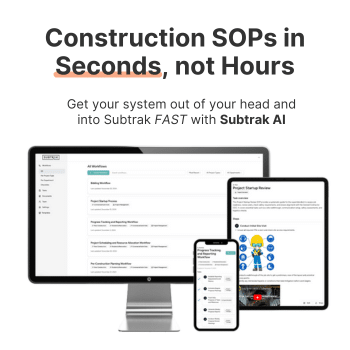
👈 Use this SOP template inside Subtrak
Edit with AI. Customize in seconds. Store and share all your SOPs and checklists in one place.