
Initial Budget Range Review Checklist for Home Builder
This checklist is designed to guide the sales department of a home building company through the process of reviewing and establishing an initial budget range for custom home projects. It ensures that the budget aligns with both historical cost data and client expectations while identifying potential unknowns and exclusions. This process is crucial for preventing scope creep and managing financial expectations, ultimately leading to a smoother project execution.
Review historical cost data
Step 1: Gather historical project data
Collect data from past projects, focusing on those similar in scope and scale to the current project. Use accounting software or project management tools to extract detailed cost reports.
Step 2: Analyze cost trends
Examine the data for patterns in material, labor, and overhead costs. Identify any fluctuations or anomalies that could impact future projects.
Step 3: Identify cost benchmarks
Establish benchmarks for key cost components such as square footage, material types, and labor rates. These benchmarks will serve as a reference for the current budget range.
Assess known project variables
Step 1: Review project specifications
Examine the project's architectural plans and specifications to understand the scope and complexity. Pay attention to unique design elements that may affect costs.
Step 2: Evaluate site conditions
Assess the construction site for factors such as accessibility, topography, and soil conditions. These can significantly impact construction costs and timelines.
Step 3: Consider material preferences
Discuss with the client their preferences for materials and finishes. High-end or custom materials can increase costs and should be factored into the budget.
Identify unknowns and potential risks
Step 1: Conduct risk assessment
Identify potential risks such as regulatory changes, supply chain disruptions, or labor shortages. Develop contingency plans to mitigate these risks.
Step 2: Consult with project stakeholders
Engage with architects, engineers, and subcontractors to gather insights on potential challenges. Their expertise can help identify unknowns early in the process.
Step 3: Document assumptions and exclusions
Clearly document any assumptions made during the budgeting process, as well as exclusions that could impact the final cost. This transparency helps manage client expectations.
Compare client expectations against realistic ranges
Step 1: Review client budget goals
Discuss with the client their financial goals and constraints. Understand their priorities and any flexibility in their budget.
Step 2: Present cost benchmarks
Share the established cost benchmarks and explain how they relate to the client's project. Provide context for any discrepancies between client expectations and realistic costs.
Step 3: Adjust budget range as needed
If necessary, adjust the budget range to better align with client expectations, while ensuring it remains realistic and achievable.
Present budget range to client
Step 1: Prepare presentation materials
Create a detailed presentation that outlines the budget range, including cost breakdowns and justifications for each component.
Step 2: Explain cost drivers
Discuss the primary factors driving costs, such as material choices, labor rates, and project complexity. Help the client understand how these elements impact the overall budget.
Step 3: Address client questions and concerns
Be prepared to answer any questions the client may have about the budget. Address concerns transparently and provide additional information as needed.
Discuss allowances and contingencies
Step 1: Define allowances
Explain any allowances included in the budget, such as for fixtures or finishes. Clarify what is covered by these allowances and any limitations.
Step 2: Outline contingency plans
Discuss the contingency funds set aside for unforeseen expenses. Explain the importance of these funds in maintaining the project's financial health.
Step 3: Seek client approval
Ensure the client understands and agrees with the proposed allowances and contingencies. Obtain their approval before proceeding.
Clarify exclusions and limitations
Step 1: List budget exclusions
Provide a comprehensive list of items not covered by the budget, such as landscaping or permit fees. Ensure the client is aware of these exclusions.
Step 2: Explain project limitations
Discuss any limitations that may impact the project, such as zoning restrictions or design constraints. Clarify how these factors could affect costs.
Step 3: Document client acknowledgment
Have the client acknowledge their understanding of the exclusions and limitations. This documentation helps prevent disputes later in the project.
Document acceptance or misalignment
Step 1: Prepare acceptance documentation
Create a formal document outlining the agreed-upon budget range and any conditions. Include signatures from both parties to confirm acceptance.
Step 2: Address any misalignment
If there is a misalignment between the client's expectations and the proposed budget, discuss potential adjustments or compromises. Document these discussions and any agreed changes.
Step 3: Plan follow-up actions
Determine any necessary follow-up actions, such as revising the budget or scheduling additional meetings. Ensure all parties are clear on the next steps.
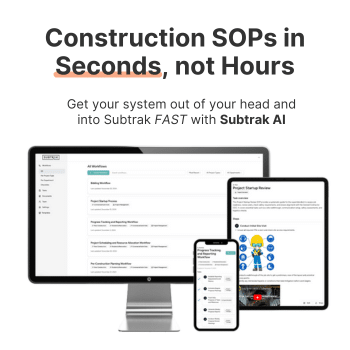
👈 Use this SOP template inside Subtrak
Edit with AI. Customize in seconds. Store and share all your SOPs and checklists in one place.